


Understanding Multi-Layer Chip Verification Architecture
Modern casino chip verification extends far beyond simple counterfeit detection. RFID technology enables a sophisticated multi-layer security architecture that verifies chip authenticity at multiple points throughout gaming operations, from initial chip issuance through every bet placement and payout. This layered approach creates defense in depth, ensuring that no single point of failure compromises the entire system.

Traditional chip security relied on visual inspection, tactile assessment, and occasional physical audits. These methods worked reasonably well but left gaps that sophisticated counterfeiters exploited. RFID multi-layer verification addresses these gaps by embedding authentication capabilities directly into the chip verification process, creating continuous validation rather than periodic spot checks.
The multi-layer concept refers to verification occurring at multiple touchpoints: at the cage during chip issuance, at the gaming table when chips enter play, continuously during table gameplay, at the table when chips change hands, and at the cage during chip redemption. Each layer adds redundancy and catches potential issues that previous layers might miss.
Layer One: Cage-Level Chip Verification
The first verification layer occurs at the cage when chips are first issued to players. This initial authentication establishes the baseline for all subsequent verifications. RFID readers at the cage validate each chip’s unique identifier, denomination, and embedded security parameters before releasing chips to players.
Cage-level verification serves multiple purposes. It confirms chips are genuine and properly encoded. It logs the initial chain of custody, establishing the chip’s provenance in the digital record. It confirms the denomination matches the transaction request, preventing errors that could create accounting discrepancies.
Advanced cage systems incorporate multiple verification frequencies and protocols within a single reading station. This multi-frequency approach detects chips that might defeat single-frequency readers, increasing the difficulty of introducing counterfeit chips into the system. The investment in sophisticated cage verification pays dividends throughout the chip lifecycle.
Layer Two: Table Entry Verification
The second verification layer occurs when chips enter a gaming table. Table-mounted RFID antennas detect and verify chips as they cross the table boundary. This verification confirms that chips approaching the table are legitimate and belong in the gaming environment.
Table entry verification serves as a critical checkpoint against chip substitution schemes. Players attempting to introduce counterfeit chips by crossing them onto the table face immediate detection. The system alerts floor supervisors and surveillance simultaneously, enabling real-time intervention before gameplay continues.
This layer also captures the transition of chips from player custody to table custody. The system records the specific chips now associated with a particular table position, creating a detailed movement record. If disputes arise later regarding chip ownership or denomination, the verification record provides authoritative evidence.
Layer Three: Continuous In-Play Verification
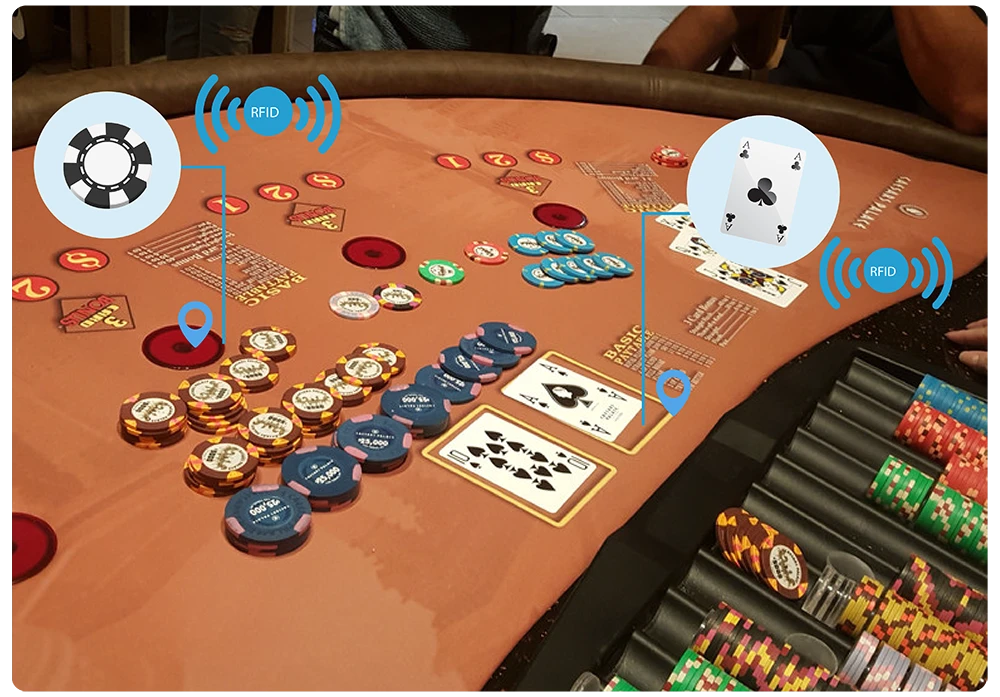
The third and most sophisticated verification layer operates continuously during gameplay. Embedded RFID antennas within the table felt or under the table surface continuously monitor chip positions and verify chip authenticity without disrupting game flow.
Continuous verification detects chips that appear on the table through illegitimate means. It identifies chips that have been removed from the table without proper authorization. It tracks chip movements between table positions, verifying that all movements correspond to legitimate gameplay actions.
This layer provides the richest security data. Every chip on every active table position undergoes continuous authentication. The system builds a comprehensive movement history for each chip throughout its time on the table. This data supports both real-time security alerts and post-incident forensic investigation.
Layer Four: Payout Verification
The fourth verification layer occurs when chips leave the table through payouts or color-ups. Before any chip leaves the table, the system verifies its authenticity and confirms the payout amount matches authorized game outcomes.
Payout verification prevents several common cheating schemes. It prevents dealers from adding chips to legitimate payouts. It prevents players from claiming payouts for chips that were never in play. It ensures color-up exchanges involve chips of the correct denominations and aggregate values.
This verification layer integrates with table game management systems to cross-check payouts against game logic. The system confirms that payout requests correspond to legitimate game outcomes recorded by the table game software. Discrepancies trigger immediate supervisory review RFID Baccarat Table Display.
Layer Five: Cage Return Verification
The fifth and final verification layer occurs when chips return to the cage for redemption or transfer. This final checkpoint confirms chips returning to inventory are legitimate, properly denominated, and have valid transaction histories.
Cage return verification represents the last opportunity to detect counterfeit chips before they re-enter circulation. The system checks each chip against its complete transaction history, confirming it followed legitimate paths from issuance through table play to redemption. Chips with anomalous histories trigger detailed investigation.
This layer also supports automated chip aging and retirement tracking. The system monitors chip condition through repeated verifications, identifying chips requiring removal from circulation for maintenance or replacement. This predictive maintenance capability extends chip lifespan and maintains consistent chip quality.
Technical Implementation of Multi-Layer Systems
Implementing multi-layer verification requires careful integration of hardware and software components. RFID chips must contain sufficient memory for security parameters and verification history. Table antennas must provide adequate read coverage without creating interference between adjacent tables. System software must correlate verification events across layers in real time.
The technical architecture typically employs a hierarchical design. Edge computing at each table processes local verification events and generates immediate alerts. A central server aggregates data from all tables, maintains global chip registries, and supports enterprise-wide analytics. Network redundancy ensures verification continuity even during temporary connectivity interruptions.
Hardware selection significantly impacts system effectiveness. Chip transponders must survive the harsh casino environment, including repeated handling, exposure to liquids, and electromagnetic interference from gaming equipment. Table antennas must provide consistent coverage despite metal components in table construction and environmental interference from adjacent equipment.
Data Correlation and Anomaly Detection
Multi-layer verification generates massive amounts of verification data. Sophisticated analytics systems correlate this data to detect anomalies that single-layer verification would miss. Pattern recognition algorithms identify verification sequences that suggest counterfeit chip introduction, chip switching, or other security breaches.
Anomaly detection employs multiple techniques. Statistical analysis identifies verification patterns that deviate from established baselines. Sequence analysis confirms chip movement histories follow logical progressions. Cross-reference analysis correlates verification events across multiple tables to identify coordinated schemes.
Machine learning improves detection accuracy over time. Systems trained on historical verification data learn to distinguish legitimate verification patterns from suspicious anomalies. False positive rates decrease as the system accumulates experience, reducing alert fatigue among security personnel.
Integration with Surveillance Systems
Multi-layer verification integrates with casino surveillance systems to create unified security operations. Verification alerts trigger automatic camera聚焦 on relevant tables. Verification data appears alongside video feeds, enabling security operators to assess situations comprehensively.
This integration supports both reactive investigation and proactive threat identification. Security operators use verification data to investigate specific incidents, tracing chip movements through video archives to reconstruct events. They also monitor verification patterns to identify emerging threats before significant losses occur.
Surveillance integration extends to regulatory compliance. Verification records support regulatory reporting requirements in jurisdictions that mandate detailed chip tracking. The combination of RFID verification data and synchronized video provides powerful evidence for regulatory inquiries and investigations.
Operational Considerations and Staff Training
Successful multi-layer verification requires effective staff training and operational procedures. Cage staff must understand how to use verification equipment and respond to verification failures. Dealers must understand how verification affects their interactions with chips and players. Supervisors must understand verification alerts and appropriate response protocols.
Training programs should address both normal operations and exceptional circumstances. Staff need clear guidance on how to handle verification failures, equipment malfunctions, and verification alerts. Escalation procedures should be unambiguous, ensuring consistent responses across shifts and personnel changes.
Operational procedures should balance security with customer experience. Excessive alerts or intrusive verification steps can disrupt gameplay and frustrate players. The optimal configuration minimizes friction while maintaining security objectives. Regular procedure reviews help identify opportunities to improve efficiency without compromising security.
Cost-Benefit Analysis for Multi-Layer Verification
The investment in multi-layer verification requires compelling business justification. Direct benefits include reduced counterfeit chip losses, decreased internal theft, and improved regulatory compliance. Indirect benefits include enhanced reputation, player confidence, and operational efficiency Macaumr RFID Solutions.
Cost analysis considers hardware investment, software licensing, installation labor, ongoing maintenance, and operational overhead. Most properties achieve return on investment within eighteen to thirty-six months, depending on chip volume, average bet sizes, and existing security infrastructure.
Risk-adjusted analysis considers the potential cost of security breaches without multi-layer verification. Counterfeit chip losses, internal theft, and regulatory sanctions can far exceed the investment in comprehensive verification systems. Properties in high-risk environments often justify investment based on risk reduction alone.
Frequently Asked Questions
How do multi-layer RFID verification systems handle chips from other casinos or gaming jurisdictions?
Cross-jurisdictional chip verification depends on interoperability standards. Most RFID chip systems use proprietary encoding that prevents direct verification of chips from other properties. Some operators maintain reciprocal verification agreements with partner properties, exchanging chip identifiers to enable basic authentication. However, full multi-layer verification typically only works with internally issued chips.
What happens when an RFID verification layer detects a suspect chip?
The system generates alerts at multiple levels simultaneously. Floor supervisors and surveillance receive immediate notification. The suspect chip is flagged in the system, preventing further transactions. Standard procedure involves visual inspection by supervisors, documentation of the detection event, and escalation to security personnel for investigation. Players involved may be temporarily restricted from further play pending resolution.
Can multi-layer verification be bypassed or defeated by technical means?
Technically sophisticated attackers have attempted various bypass methods, including signal shielding, signal replay, and chip cloning. Multi-layer systems incorporate countermeasures against these techniques, including frequency hopping, cryptographic authentication, and anomaly detection. Regular security assessments identify emerging bypass techniques and enable proactive system updates.
How does multi-layer verification affect chip design and manufacturing?
Chip manufacturers must incorporate RFID components that meet verification system specifications. This includes appropriate transponder types, memory capacity for security parameters, and physical construction that survives casino use. Multi-layer verification requirements have influenced industry chip design standards, driving improvements in chip security features.
What is the maintenance burden for multi-layer verification systems?
Ongoing maintenance includes regular calibration of table antennas, replacement of worn or failed components, software updates, and system health monitoring. Most properties budget for annual maintenance costs representing approximately fifteen to twenty percent of initial hardware investment. Preventive maintenance programs reduce unexpected failures and extend system lifespan.