


Understanding the Sense Board Architecture
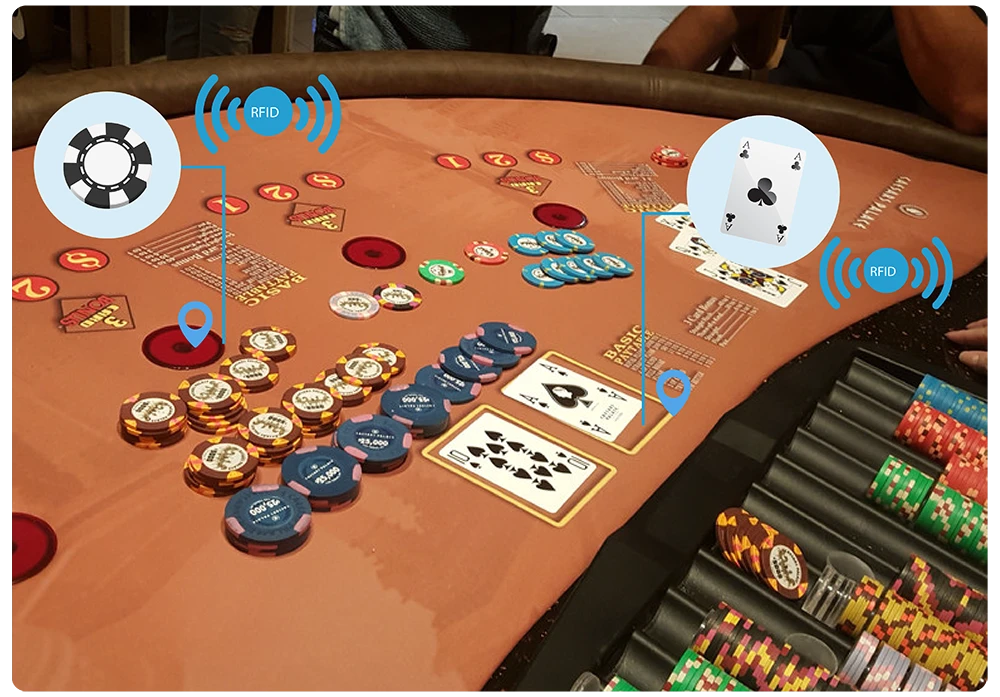
The RFID sense board represents the sensing foundation of smart casino table technology. Located beneath the table felt or embedded within the table structure, sense boards contain precisely positioned antenna arrays that detect and read RFID chips placed on the gaming surface. Understanding how sense boards function reveals the sophisticated engineering that enables continuous chip tracking during gameplay.
A typical sense board consists of multiple antenna elements arranged in grid or array patterns. Each antenna element connects to a multiplexer that manages reader communication with multiple antennas sequentially. The reader electronics process signals from active antennas, identifying chips within each antenna’s read zone and extracting embedded data. Sophisticated firmware coordinates this multi-antenna operation to create a continuous sensing coverage area.
Sense board design must balance multiple competing requirements. Coverage must be complete across the entire betting area. Read zones must be sufficiently precise to distinguish chips at adjacent betting positions. Physical construction must survive heavy gaming use. Electromagnetic characteristics must avoid interference with other casino equipment. These requirements drive complex engineering decisions in sense board development.
Antenna Design and Coverage Optimization
Antenna design fundamentally determines sense board performance. Each antenna element creates a localized read zone that detects chips placed within its coverage area. The geometry, size, and positioning of antenna elements define the coverage pattern across the table surface.
Coverage optimization addresses the challenge of complete betting area sensing with finite antenna resources. Designers model betting positions and player reach patterns to identify optimal antenna placements. High-activity areas such as primary betting positions receive finer antenna spacing. Lower-activity areas such as chip racks receive coarser spacing appropriate to expected chip density.
Practical antenna designs employ multiple antenna layers operating at different frequencies. This multi-frequency approach increases read capacity and improves discrimination between adjacent chips. Frequency isolation enables simultaneous reading of multiple chips that might confuse single-frequency systems. Modern sense boards typically incorporate two to four antenna layers operating across UHF and HF frequency bands Smart Gaming Table.
Signal Processing and Chip Identification
RFID readers connected to sense boards must process signals from multiple antenna elements and identify individual chips amid electromagnetic noise. Signal processing algorithms extract chip responses from background interference, distinguish overlapping signals from clustered chips, and resolve ambiguous readings that result from multipath reflection.
Chip identification relies on unique chip identifiers stored in RFID transponder memory. When a reader interrogates a chip, the chip responds with its identifier, denomination code, and security parameters. The reader matches this identifier against its registered chip database to determine chip authenticity, denomination, and authorized status.
Advanced signal processing employs algorithms adapted from communications engineering. Noise filtering removes electromagnetic interference from fluorescent lighting, gaming equipment, and adjacent tables. Time-domain analysis resolves signal overlaps that occur when multiple chips respond simultaneously. Spatial filtering uses antenna geometry to localize chip positions within read zones.
Position Tracking and Bet Recognition
Beyond simple chip detection, sense boards enable position tracking that determines exact chip locations on the table surface. Position tracking algorithms combine signal strength measurements from multiple antennas to triangulate chip positions with accuracy sufficient to identify specific betting positions.
Bet recognition translates chip position data into bet information according to game rules. For each betting position, the system determines which chips belong to active bets versus chip racks or player stacks. The system calculates total bet amounts by denomination. It validates bet compliance with table minimums and maximums. This translation from position to meaning creates the actionable bet data that drives downstream applications.
Game-specific recognition logic accommodates different bet placement conventions across game types. Baccarat bet recognition differs from blackjack, which differs from roulette. Sense board firmware or connected processors implement game-specific recognition algorithms that adapt to the active game type. Configuration flexibility enables the same sense board hardware to support multiple game types.
Real-Time Data Transmission and Latency
Bet recognition data must reach operational systems quickly to support real-time applications. Surveillance monitoring, table game management, and player tracking systems require bet data with minimal latency. Sense board systems employ optimized data pathways to minimize delays between chip placement and system response.
Latency specifications for casino sense boards typically target sub-second response for critical alerts. Chip authentication failures should generate alerts within five hundred milliseconds of chip placement. Bet recognition data should reach game management systems within one second of bet finalization. These specifications require careful optimization of reader firmware, network transport, and application processing.
Network architecture affects latency significantly. Direct reader-to-server connections minimize intermediate processing delays. Edge computing at the table level enables rapid local response while still transmitting data to central systems. Modern architectures typically employ hybrid approaches, with edge processing handling time-critical functions and cloud or server processing handling analytics and record-keeping Macaumr Casino Supplier.
Environmental Factors and Signal Integrity
Casino environments present challenging conditions for RFID signal integrity. Metal table components, electronic gaming equipment, fluorescent lighting, and dense chip populations all create electromagnetic interference. Sense board designs must account for these interference sources to maintain reliable reading performance.
Metal components in table construction create reflection and shielding effects that complicate antenna design and chip reading. Designers model metal geometry during design and incorporate compensation techniques. Antenna elements are positioned and tuned to account for metal proximity effects. Testing in realistic table configurations validates performance before production deployment.
Chip density in high-stakes baccarat creates reading challenges that designers must address specifically. Large chip stacks, multiple simultaneous bets, and rapid chip movement all stress reading systems. Advanced sense boards incorporate collision resolution algorithms that handle dense chip populations effectively. Testing protocols simulate high-density scenarios to validate system performance.
Calibration and Maintenance Procedures
Sense boards require calibration to maintain consistent reading performance over time. Environmental conditions, component aging, and physical disturbances can shift antenna characteristics and reader calibration. Regular calibration procedures ensure that systems maintain specified performance throughout their operational life.
Calibration procedures vary by sense board manufacturer but typically include reference chip verification, antenna tuning checks, and position accuracy validation. Automated calibration routines run during scheduled maintenance windows. Manual calibration adjustments address issues that automated procedures cannot resolve.
Maintenance extends beyond calibration to include physical inspection and component replacement. Table felt replacement requires careful handling to avoid sense board damage. Cable connections require periodic inspection for degradation. Reader electronics may require component-level repair or replacement during operational life. Comprehensive maintenance programs maximize sense board reliability and lifespan.
Integration with Table Game Management Systems
Sense boards function as sensor components within larger table game management ecosystems. Data flows from sense boards through reader electronics, processing software, and network infrastructure to reach operational applications. Integration architecture must accommodate diverse system configurations while maintaining data integrity and performance.
Application programming interfaces enable sense board data integration with table game management platforms. Standard data formats for chip detection events, bet records, and authentication alerts facilitate interoperability. Custom integration development may be required for proprietary systems that lack standard interface support.
Integration testing validates that sense board data reaches operational applications correctly and timely. Testing scenarios cover normal operation, error conditions, and stress scenarios. Performance testing confirms that integration architecture meets latency and throughput requirements. Comprehensive testing prevents integration failures from compromising operational effectiveness.
Advances in Sense Board Technology
Sense board technology continues advancing with improvements in antenna design, signal processing, and integration capability. Emerging approaches include distributed antenna systems that provide more uniform coverage, advanced algorithms that improve chip discrimination, and integration with additional sensing modalities such as weight sensing.
Distributed antenna architectures spread antenna elements more uniformly across the table surface, improving coverage consistency and reducing dead zones. These architectures typically employ more antenna elements at lower individual power levels, reducing interference effects while maintaining comprehensive coverage.
Weight sensing integration adds another dimension to chip detection. Combining RFID identification with weight measurement provides redundant verification that improves authentication confidence. Weight data also supports bet amount verification independent of denomination coding. Some manufacturers now offer integrated sense board and weight sensing solutions.
Frequently Asked Questions
What happens when chips are stacked on top of each other at the same betting position?
Advanced sense boards employ multi-tag protocols that enable reading of stacked chips simultaneously. Signal processing algorithms resolve overlapping chip responses based on subtle timing and signal strength differences. Most current systems can read through stacks of five to ten chips reliably, though reading accuracy may decrease with very dense stacks.
How do sense boards handle chips that are partially outside their designated betting areas?
Position tracking algorithms define betting area boundaries based on game configuration. Chips near boundary zones may be read by multiple position zones. Resolution logic assigns ambiguous chips to the most likely position based on reading confidence scores, historical placement patterns, and game state. Boundary cases are flagged for supervisory review when confidence is low.
Can sense board readings be affected by player belongings or personal items on the table?
Sense board readers are tuned specifically to RFID chip responses and filter out signals from other objects. Personal items such as phones, wallets, and jewelry do not contain compatible RFID signals and do not affect reading accuracy. However, metal objects can create shielding effects that slightly reduce read range for nearby chips.
What is the expected operational lifespan of a sense board before replacement is required?
Sense board operational lifespan typically ranges from five to eight years in casino environments. Component longevity varies by manufacturer and environmental conditions. Regular maintenance and calibration extend operational life. Major table renovations or felt replacement often coincide with sense board inspection or replacement.
How do sense boards accommodate different table sizes and gaming configurations?
Sense board designs are available in multiple sizes optimized for standard table configurations. Custom configurations address non-standard table sizes. Modular designs enable expansion or reconfiguration as gaming requirements change. Configuration software adapts antenna parameters and bet recognition logic to specific table geometries and game types.